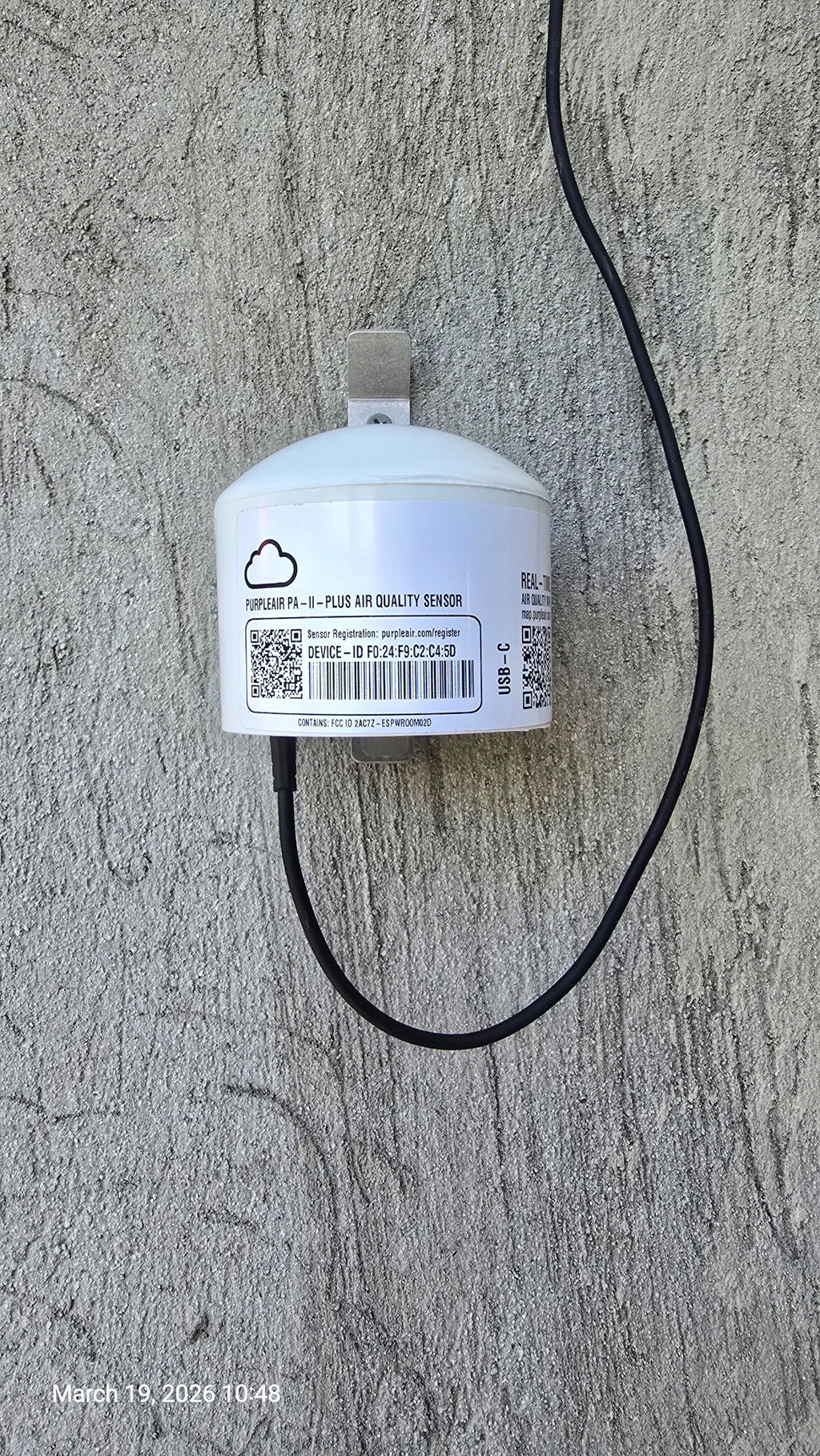
Measure air pollution in your neighborhood with the most popular PurpleAir sensor. This sensor measures PM2.5 which consists of particles like smoke and dust.
Because PM2.5 is absorbed directly into your body through the lungs, the EPA considers it the most dangerous of particulates.
Designed for outdoor use, this monitor is perfect for residential, commercial, or industrial users looking for a reliable way to collect real-time data on PM2.5. This type of pollution particulate pollution consists of small particles like smoke and dust and is considered to be the most harmful to our health.
Improving upon our most loved and original classic sensor, this updated version makes it easy to replace the laser counters.
Connect this sensor to WiFi and it transmits data to the PurpleAir Real-Time Map, which is accessible on any smart device.
The PurpleAir Classic Plus is available with an optional SD-Card Data Logger for offline data collection.
Please Note: A Power supply is NOT included; find a suitable option here.
This device complies with Part 15 of the FCC Rules. Operation is subject to the following two conditions:
This device may not cause harmful interference, and
This device must accept any interference received, including interference that may cause undesired operation.
Warning (Part 15.21)
Changes or modifications not expressly approved by the party responsible for compliance could void the user’s authority to operate the equipment.
FCC Interference Statement (Part 15.105 (b))
This equipment has been tested and found to comply with the limits for a Class B digital device, pursuant to Part 15 of the FCC Rules. These limits are designed to provide reasonable protection against harmful interference in a residential installation. This equipment generates uses and can radiate radio frequency energy and, if not installed and used in accordance with the instructions, may cause harmful interference to radio communications. However, there is no guarantee that interference will not occur in a particular installation. If this equipment does cause harmful interference to radio or television reception, which can be determined by turning the equipment off and on, the user is encouraged to try to correct the interference by one of the following measures:
Reorient or relocate the receiving antenna.
Increase the separation between the equipment and receiver.
Connect the equipment into an outlet on a circuit different from that to which the receiver is connected.
Consult the dealer or an experienced radio/TV technician for help.
To comply with FCC/IC RF exposure limits for general population / uncontrolled exposure, the antenna(s) used for this transmitter must be installed to provide a separation distance of at least 20 cm from all persons and must not be co-located or operating in conjunction with any other antenna or transmitter.
This device complies with Part 15 of the FCC Rules. Operation is subject to the following two conditions:
This device may not cause harmful interference, and
This device must accept any interference received, including interference that may cause undesired operation.
Warning (Part 15.21)
Changes or modifications not expressly approved by the party responsible for compliance could void the user’s authority to operate the equipment.
FCC Interference Statement (Part 15.105 (b))
This equipment has been tested and found to comply with the limits for a Class B digital device, pursuant to Part 15 of the FCC Rules. These limits are designed to provide reasonable protection against harmful interference in a residential installation. This equipment generates uses and can radiate radio frequency energy and, if not installed and used in accordance with the instructions, may cause harmful interference to radio communications. However, there is no guarantee that interference will not occur in a particular installation. If this equipment does cause harmful interference to radio or television reception, which can be determined by turning the equipment off and on, the user is encouraged to try to correct the interference by one of the following measures:
Reorient or relocate the receiving antenna.
Increase the separation between the equipment and receiver.
Connect the equipment into an outlet on a circuit different from that to which the receiver is connected.
Consult the dealer or an experienced radio/TV technician for help.
To comply with FCC/IC RF exposure limits for general population / uncontrolled exposure, the antenna(s) used for this transmitter must be installed to provide a separation distance of at least 20 cm from all persons and must not be co-located or operating in conjunction with any other antenna or transmitter.
Remove the microSD card by pushing it in to unlatch and then pull out with tweezers. Insert the SD card into a computer to access the csv and data files.
More information on working with SD data is available here on the PurpleAir community site.
We also provide a software tool to help work with this data here.
This device complies with Part 15 of the FCC Rules. Operation is subject to the following two conditions:
This device may not cause harmful interference, and
This device must accept any interference received, including interference that may cause undesired operation.
Warning (Part 15.21)
Changes or modifications not expressly approved by the party responsible for compliance could void the user’s authority to operate the equipment.
FCC Interference Statement (Part 15.105 (b))
This equipment has been tested and found to comply with the limits for a Class B digital device, pursuant to Part 15 of the FCC Rules. These limits are designed to provide reasonable protection against harmful interference in a residential installation. This equipment generates uses and can radiate radio frequency energy and, if not installed and used in accordance with the instructions, may cause harmful interference to radio communications. However, there is no guarantee that interference will not occur in a particular installation. If this equipment does cause harmful interference to radio or television reception, which can be determined by turning the equipment off and on, the user is encouraged to try to correct the interference by one of the following measures:
Reorient or relocate the receiving antenna.
Increase the separation between the equipment and receiver.
Connect the equipment into an outlet on a circuit different from that to which the receiver is connected.
Consult the dealer or an experienced radio/TV technician for help.
To comply with FCC/IC RF exposure limits for general population / uncontrolled exposure, the antenna(s) used for this transmitter must be installed to provide a separation distance of at least 20 cm from all persons and must not be co-located or operating in conjunction with any other antenna or transmitter.
Remove the microSD card by pushing it in to unlatch and then pull out with tweezers. Insert the SD card into a computer to access the csv and data files.
More information on working with SD data is available here on the PurpleAir community site.
We also provide a software tool to help work with this data here.
This device complies with Part 15 of the FCC Rules. Operation is subject to the following two conditions:
This device may not cause harmful interference, and
This device must accept any interference received, including interference that may cause undesired operation.
Warning (Part 15.21)
Changes or modifications not expressly approved by the party responsible for compliance could void the user’s authority to operate the equipment.
FCC Interference Statement (Part 15.105 (b))
This equipment has been tested and found to comply with the limits for a Class B digital device, pursuant to Part 15 of the FCC Rules. These limits are designed to provide reasonable protection against harmful interference in a residential installation. This equipment generates uses and can radiate radio frequency energy and, if not installed and used in accordance with the instructions, may cause harmful interference to radio communications. However, there is no guarantee that interference will not occur in a particular installation. If this equipment does cause harmful interference to radio or television reception, which can be determined by turning the equipment off and on, the user is encouraged to try to correct the interference by one of the following measures:
Reorient or relocate the receiving antenna.
Increase the separation between the equipment and receiver.
Connect the equipment into an outlet on a circuit different from that to which the receiver is connected.
Consult the dealer or an experienced radio/TV technician for help.
To comply with FCC/IC RF exposure limits for general population / uncontrolled exposure, the antenna(s) used for this transmitter must be installed to provide a separation distance of at least 20 cm from all persons and must not be co-located or operating in conjunction with any other antenna or transmitter.
Price is higher than I would like but fast shipping and pretty easy set up. Can run on a regular USB c cable.
R
Robert
Perfect for me
I
Igor Kuvychko
A+ highly recommended!
I’ve had an excellent experience with PurpleAir. The sensor itself has been reliable and useful, but what really makes PurpleAir special is the broader ecosystem around it. The PurpleAir network is a genuinely valuable public resource for understanding local air quality, and I’m glad to contribute data to it.
Their customer service has also been excellent. After I placed my order, they noticed that I had not included a power supply, reached out proactively, and gave me the option to add one. I did, and it was absolutely the right call.
I also really appreciate PurpleAir’s support for hobbyist and community projects. I use my sensor as part of a personal environmental monitoring project, and PurpleAir generously provided API credits so I can poll my own sensor data. With my modest usage, the credits are enough to last for years.
Overall: great product, great network, great company. Highly recommended.
K
Kettle Falls School District
Great until it dies
It appears that life expectancy for these sensors are about 2-3 years. That's pretty frequent for a school district with a limited budget. I've been in Kettle Falls, WA for 3 years, and have 4 units and have changed all 4 in the time I've been here, 2 twice. We use it for our athletic programs, to monitor air quality and have fairly frequent wildfires in the area.
Hi Robert, thank you for sharing your experience. Did you know you can replace or service the units? Laser counters can be cleaned with compressed air and if that does not work, we offer replacements at much lower cost than a whole new sensor. Please reach out to us if you need any help.
R
Richard Desilets
Excellent Air Quality Sensor
I installed one of these years ago when working for the DEQ in Oregon. They are accurate when comparing the data to the more expensive equipment the DEQ uses.
Decided to install one at our house in Cebu Philippines, easy setup! Majority of the time AQI here is not so good because of the trash burning the neighbors do. These arr excellent little units. Highly recommended if your interested in air quality around your neighborhood!